Is There Any Data Out There? (Part I)
This week we’re taking a look at some of the data options we’ve come across in our experience. We’ll review how they can or can’t be used for the benefit of Engineers and Consultants (“Es and Cs”). The current data situation is pretty bleak but with your help there may be hope.
 Whether you’re digging it out of your own marketing database, reading it in a magazine, paying a hefty fee, or paying even more for a custom study, getting data is never simple. Perhaps one of the most frustrating parts of being a manager at an Engineering or Consulting firm right now is that everyone in the business world is talking about “Big Data” and it doesn’t seem like it relates to you. What is a manager to do? Here are some ideas.
Internal Data
The best way to start is by looking in the mirror. What do you want to know about your own company? Most mid to large size companies have databases for marketing or accounting. Just because you’re a one man shop doesn’t mean you can’t do this too. Everyone should be tracking their own data no matter how big or how small. If you aren’t doing it now we can’t recommend enough that you start. Excel and Quickbooks are perfectly fine places to begin. Throughout our experience we’ve identified over 25 different fields that anyone handling proposals can track. Here’s a handful to get you started:
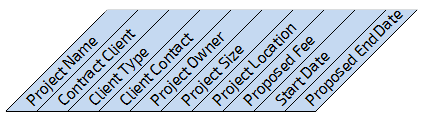
Once you have these fields you can start asking questions like “How much of our business is done directly with Owners, Architects, or Developers?” You might have an intuition for that but it’s always better to use hard numbers. Particularly because you can see how they change over time.
 You don’t have to rack your brain coming up with as many “fields” as you can think of either. Different organizations will have different data needs but it’s important to be practical about it. It’s also important to start somewhere. The benefits of tracking data can’t be overstated enough and the sooner you start the better. Knowing that you landed 5 projects last month will push you to go for 6 this month and 7 the month after that.
Lastly, if you have the feeling that you need to start with all the right fields you should ignore it. When you find out two years later that you wanted to track different market sectors it won’t mean the old data is useless. You can even go back and update the old data to get what you want from it. This is a great way to give old data new life and get more from it. Sure, it’s a pain. But it’s better to have data you can work with then nothing.
External Data
 If you already track loads of data internally this part is for you. It’s where things are getting interesting. Internal data is great but it only allows us to analyze things we think we already know. Data from the outside world puts that internal data into perspective.
Even small bits of external data can be useful. For example, if we look at the AIA website we see that there are 17,500 architecture firms owned by AIA members. For the larger firms out there; do you know the number of different clients that you have worked for? What percentage of this 17,500 have you had access to? How has your number of clients changed? Okay, “Small Data” isn’t what anyone is talking about these days so what are some more sizeable options?
We have blogged this one to death already but it bears repeating. The ENR 500 is the easiest “go-to” list of the biggest firms in the industry. For some companies this won’t be enough. For other companies it will seem outside of your reach. It’s not. This list is useful to anyone. Even if you’re a small firm, establishing a solid relationship with even one of these firms could mean the difference between celebrating at the end of the year and shutting your doors. Read the list, find the companies you know and work for, then cross them out and learn about the others.
The American Institute of Architects’ Architectural Billing Index (“ABI”) is one of the first data metrics we found when we began looking back in our early years. It’s no small wonder. The ABI has been around in one form or another since 1995 and offers what some would consider a “stock market like index” of the entire US architecture industry on a monthly basis. We will go into the ABI in more detail in Part II. Rest assured that whatever qualms we may have, the ABI is a metric you should follow and be aware of.
“Independent” Options
This is an area where it should come as no surprise that we are a little biased. There are currently a handful of different firms that cobble together studies at various times with a specific purpose in mind. We’re not going to pick on any in particular which is why we developed a list of questions. These questions form a framework that you can use to analyze any potential data source to see how it relates to your own business practice.
Data Practicality Framework
- Where does it come from?
- How is it measured?
- Who is it meant for?
- How can I use it?
Most of the independent data sources are collecting information from big companies and presenting it back to them. In that context these studies have a purpose. Smaller unrelated firms will probably find it hard to justify the cost of these reports when the titles alone are meant for someone else. Still other providers are combining so many different types of companies you have no idea if it’s actually useful.
This is where Data Cornerstone comes in. We’re able to combine data from various specialty firms and give you a metric like the ABI for your specialty discipline. Not only will we tell you what has happened, we’ll tell you where it’s going. The Data Cornerstone model relies on the knowledge that small firms make up a significant percentage of any professional services market which is exactly what these reports typically leave out. Even among architects the AIA estimates that firms with less than 9 staff make up 81% of architecture firms and 21% of architect’s billings.
Next time we’ll go into more detail by applying our “Data Practicality Framework” to the ABI. In the meantime, leave us feedback in the comments. Are there other sources of data we forgot? Maybe we can help you develop your own sources of internal data.